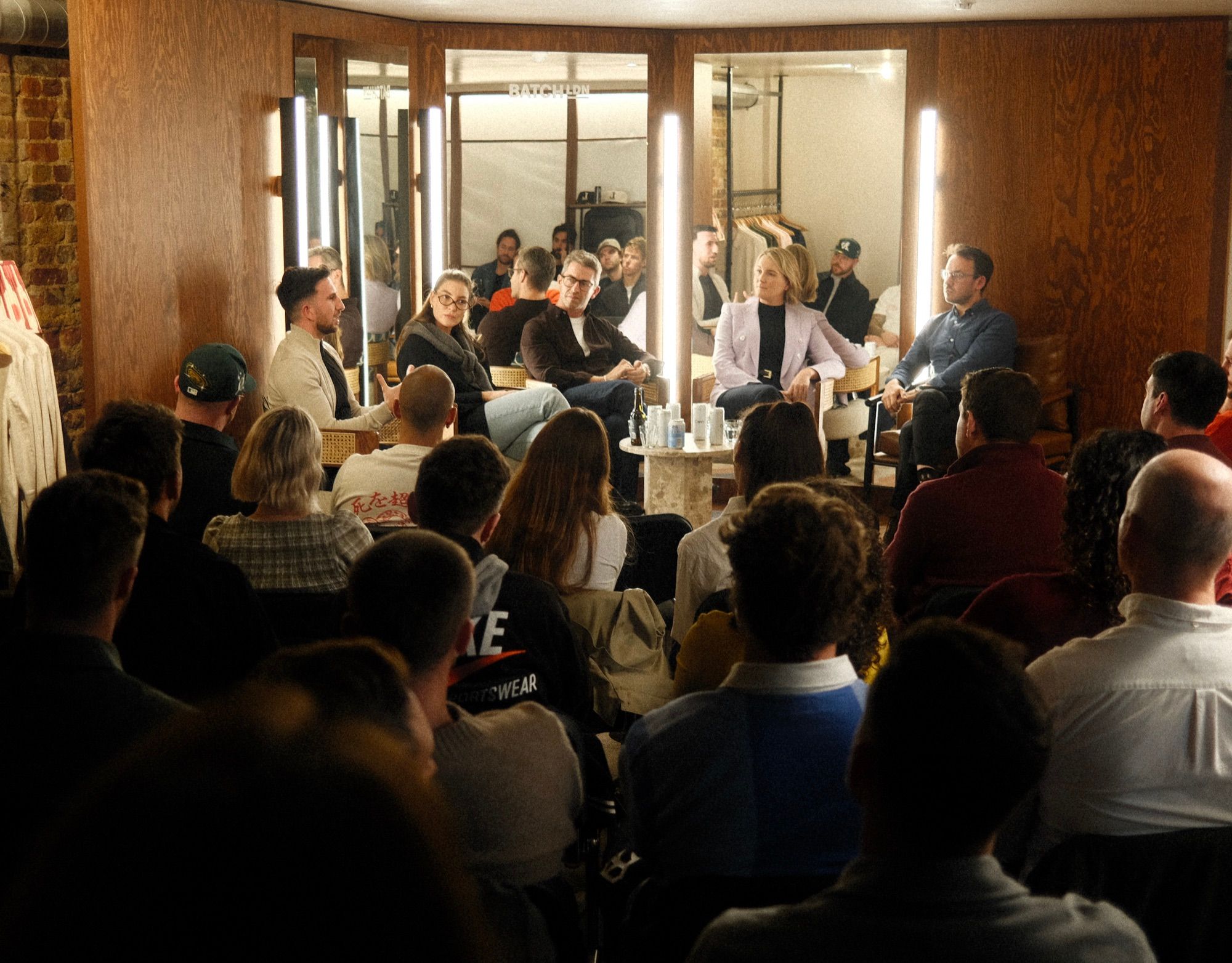


Thomas Gleeson, co-founder of StoreHero, has a blunt view of how most DTC brands track performance: they don't know what they're actually making. With close to 1,000 brands now on the platform tracking over $1.45 billion in GMV, Thomas has seen that gap between perceived and real margins play out hundreds of times.
In our conversation, he explained where European DTC brands are losing money without realising it, why a healthy-looking ROAS can hide a loss, and how the profitability conversation in Europe is still years behind the US.
Most brands overestimate their margins
When a brand first connects its data to StoreHero, pulling in Shopify, ad accounts, and accounting tools, the reaction is almost always the same.
"Generally it's something along the lines of 'the gross margin in StoreHero is wrong, our margin is much higher than that,'" Thomas said.
The gap comes down to the difference between product margin and fully loaded gross margin, which strips out shipping, discounts, refunds, taxes, transaction fees, and return costs. Gleeson said getting this number right is the single most important thing a brand can do.
"We've seen brands go out of business because they gave forecasting models to agencies to hit certain CAC targets based on gross margins that were way off the actuals," he said.
"The best operators today know this inside out," Thomas added.
Why a 3x ROAS can hide a loss
A brand running Meta ads at a 3x ROAS and scaling spend because the number looks healthy is one of the most common scenarios Thomas encounters. The problem he sees is that ROAS doesn't actually tell you whether you made money.
"What is your gross margin, fully loaded, on this number?" he asks. "If you're a reseller of electronics, for example, you've likely got 20% gross margin and might need a 4+ ROAS to break even."
The inverse is also true. A subscription creatine brand with 80% gross margin and recurring LTV might aim to keep ROAS at 1 or below, depending on growth ambitions and cash reserves.
On top of this, there's often ambiguity around attribution windows and which platform gets credit for the sale.
Join European founders, operators, and investors who read The Checkout every week.
"ROAS is honestly a great metric for optimising campaigns and even channels, but it's not how you run your business at a macro level or make spend decisions," he said. "The best form of attribution is your bank account."
Where the margin leaks hide
When asked which costs brands consistently underestimate, Gleeson's answer was blunt: "Returns, 3PL fees, discounts not factored in, shipping costs."
Those costs sit across different systems and rarely get consolidated into a single margin view.
Europe is adopting contribution margin, but slowly
Thomas moved to New York last year, and the contrast with European DTC culture was immediate.
"Brands are much more commercially focused when it comes to marketing budgets here," he said. "Brands expect agencies to build a commercial forecast from day one during the audit phase. Channel level audits of accounts will not win you business here like they will in the EU."
In Europe, the shift toward contribution margin is happening, but it has been slower. Thomas said that when StoreHero launched, getting anyone to engage with this approach was difficult but increased ad costs are now forcing the conversation.
"ROAS is great, and still directionally correct, however it's not a metric to run your business on. This ended in 2021," he said. "If you're not having a chat about contribution margin (the profit after your marketing costs) in your weekly meeting then you've got hope but not a strategy."
Thomas sees a gap in the European market for agencies that can bridge marketing and finance for their clients. It's standard practice among NYC and Southern Californian agencies, and he expects it to become standard in Europe too.
What changes when brands switch to profit-based decisions
StoreHero has built a feature that recommends spend levels based on profit rather than revenue. When brands adopt it, Thomas says "their decision making process gets easier."
"It's a lot easier to make a decision on increasing or decreasing budgets when you know what you're looking at is real. That might not sound like a big deal, but founders are craving clarity and they get that with StoreHero."
Whether the profitability blind spot hits harder at certain revenue thresholds depends less on size and more on cash, Thomas noted. A well-funded brand can afford to defer the reckoning. A founder who is not yet profitable and not flush with cash can't.
"Understanding the ambition and forecasted timeline of certain revenue goals is really important," he said. "Fast scale heightens all risks and sometimes can go wrong."
From Shopify's front row to StoreHero
Gleeson spent 2019 to 2022 as a Merchant Success Manager at Shopify, working alongside some of the platform's largest brands on eCommerce strategy, marketing, and roadmap planning. Before that, he ran his own brands and grew up in a household with a DTC business since 2004.
"At home I first saw the challenge of connecting the dots between the marketing activities I was doing for my Mam's store vs the financial performance, which my Dad was evaluating," he said.
What struck him at Shopify was that eight- and nine-figure brands faced the same disconnect. Ad spend had become the heaviest line item on most brands' P&Ls, meaning the person deploying that budget was effectively the largest investor in the business.
"I just couldn't see how this was going to continue," he said. "And so I left to start StoreHero."
StoreHero is investing in AI-driven features to help its customers improve profitability, drawing on the dataset from close to 1,000 connected brands. More detail on the platform is available at storehero.ai.
AUTHOR
CONTRIBUTOR
SUPPORTED BY PAPER RUN

Paper Run helps brands win back customers that email can't reach through automated direct mail that integrates with Shopify & Klaviyo.
SUPPORTED BY WAYFLYER

Wayflyer provides purpose-built financing to consumer brands worldwide, deploying over $6 billion to 7,000+ businesses since launching in 2020.
SUPPORTED BY RIVERFLOW

Riverflow is the leading creative AI platform for CPG and Fashion brands, built specifically for high quality, brand accurate visuals in both photoshoots, static ads and videos.
SUPPORTED BY VINE TALENT

Josh at Vine Talent provides consultative executive search for ambitious European consumer brands, helping founders access the calibre of international talent needed to unlock their next stage of growth.
JOIN OUR FOUNDER NETWORK:

VENICE FOUNDERS NETWORK
Where 200+ European consumer founders solve problems together.
An independent space for Europe's Consumer Founders & CEO's.