
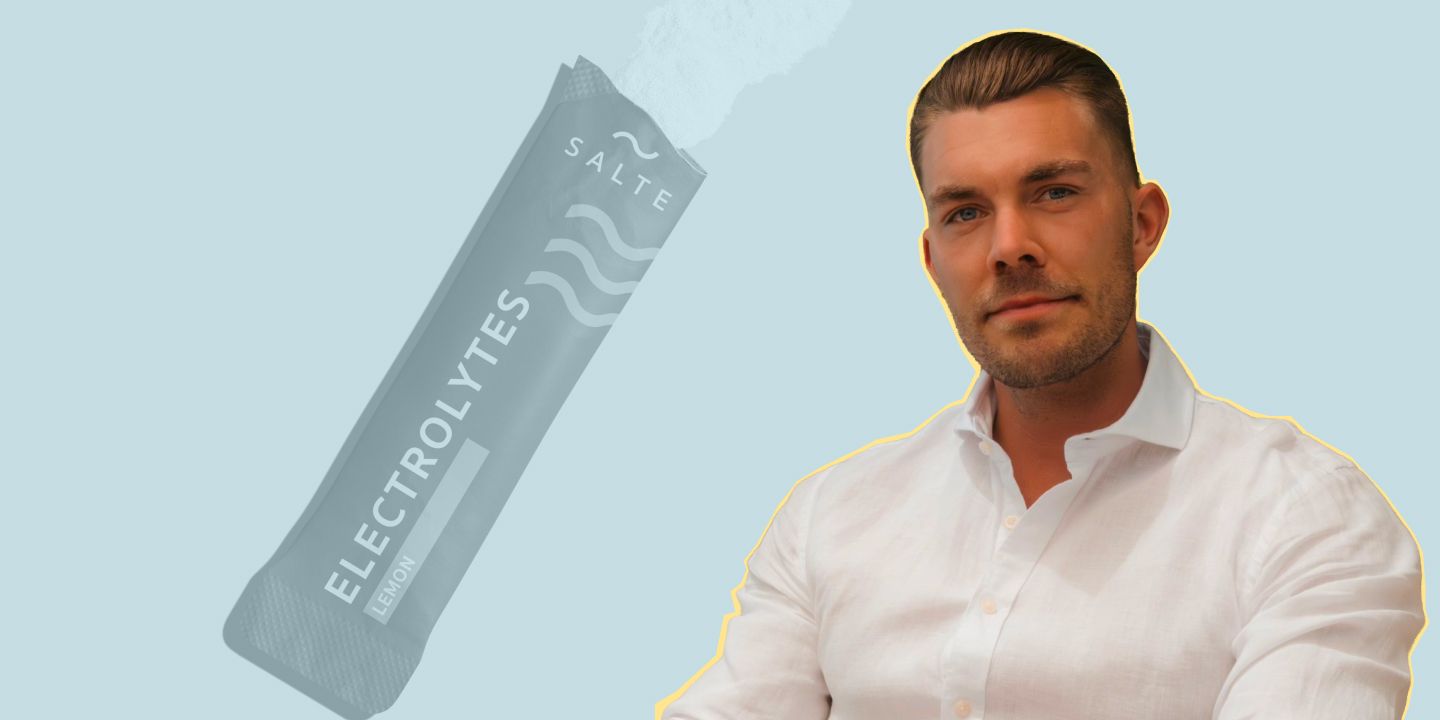
SALTE, the Scandinavian electrolyte brand founded in 2024, closed 2025 at €1.9M in revenue and is projecting €4–4.5M for 2026, all from one product sold in seven flavours. Co-founder Jesper Ståhl has stepped in as CEO to lead the next phase, taking over from a founding team that had been splitting the role between them.
The brand closed 2025 at €1.9M in revenue and is targeting €4–4.5M for 2026. Its strongest month to date hit roughly 7M SEK, about €640,000.
What makes the number interesting isn't just the growth rate. It's that SALTE has produced it without doing the thing almost every fast-growing consumables brand does at this stage, widening the range.
The argument for a single-SKU
Ståhl frames the one-product discipline as a positioning decision rather than an operational constraint.
"We want to win in the hydration space, and that requires focus," he said. "It's very tempting when you're growing to start widening the range, but we don't want to dilute what SALTE stands for."
It's very tempting when you're growing to start widening the range, but we don't want to dilute what SALTE stands for.
Asked whether a single product eventually caps growth, he pointed to depth rather than breadth: "Our consumers expect us to keep pushing this category forward through innovation, new flavours, education, community and a deeper understanding of hydration."
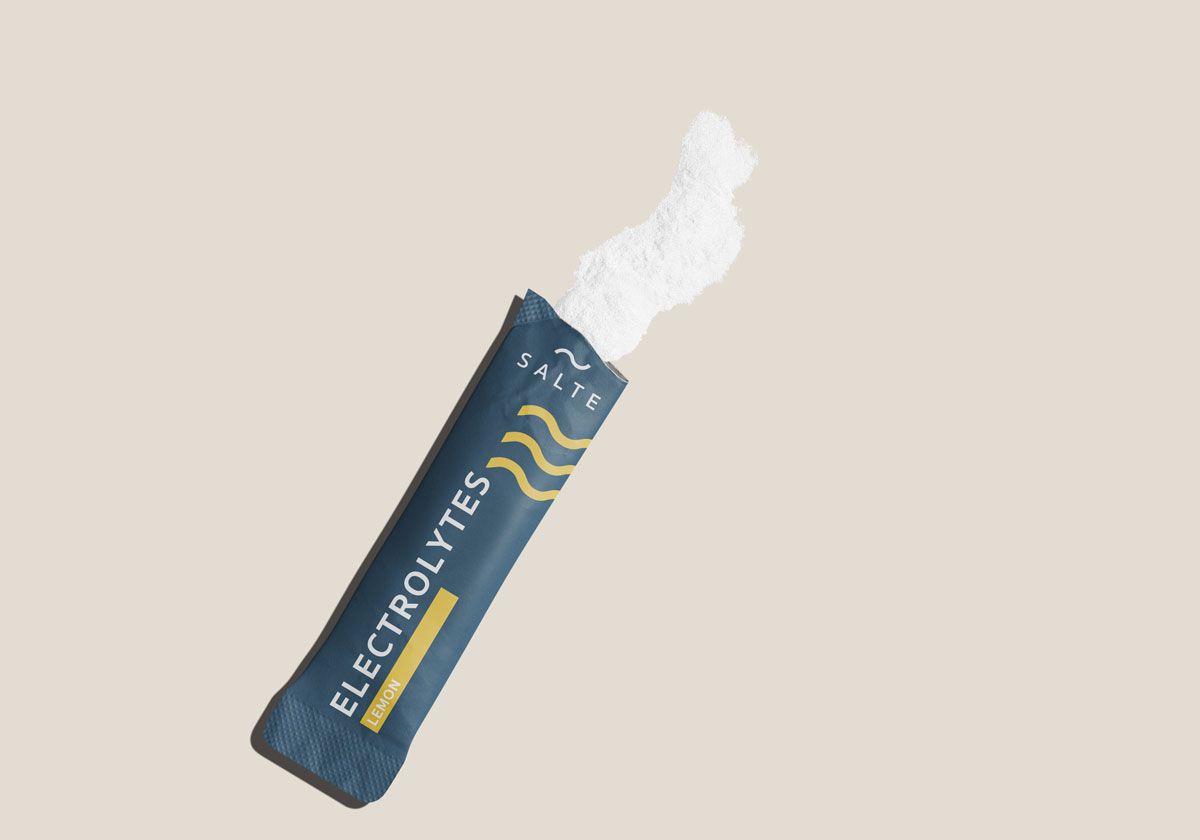
SALTE's roadmap includes new flavours, new pack sizes, and new formats, expanding the range without changing what the product is. Each addition is a variation on the same formula: 800mg sodium, 400mg potassium and 60mg magnesium per serving, sweetened with stevia, no sugar. A 30-sachet pouch retails at 289 SEK (roughly €29, or €0.86 a serving), which places SALTE at the premium end of the European electrolyte powder market.
Join European founders, operators, and investors who read The Checkout every week.
The sequencing logic is channel-led. "Different formats also open up different channels and use cases," Ståhl said. "Smaller packs can lower the barrier to trial and work well in retail, gyms and pharmacies, while larger packs are better suited for daily use and repeat purchases."
Smaller packs can lower the barrier to trial and work well in retail, gyms and pharmacies, while larger packs are better suited for daily use and repeat purchases.
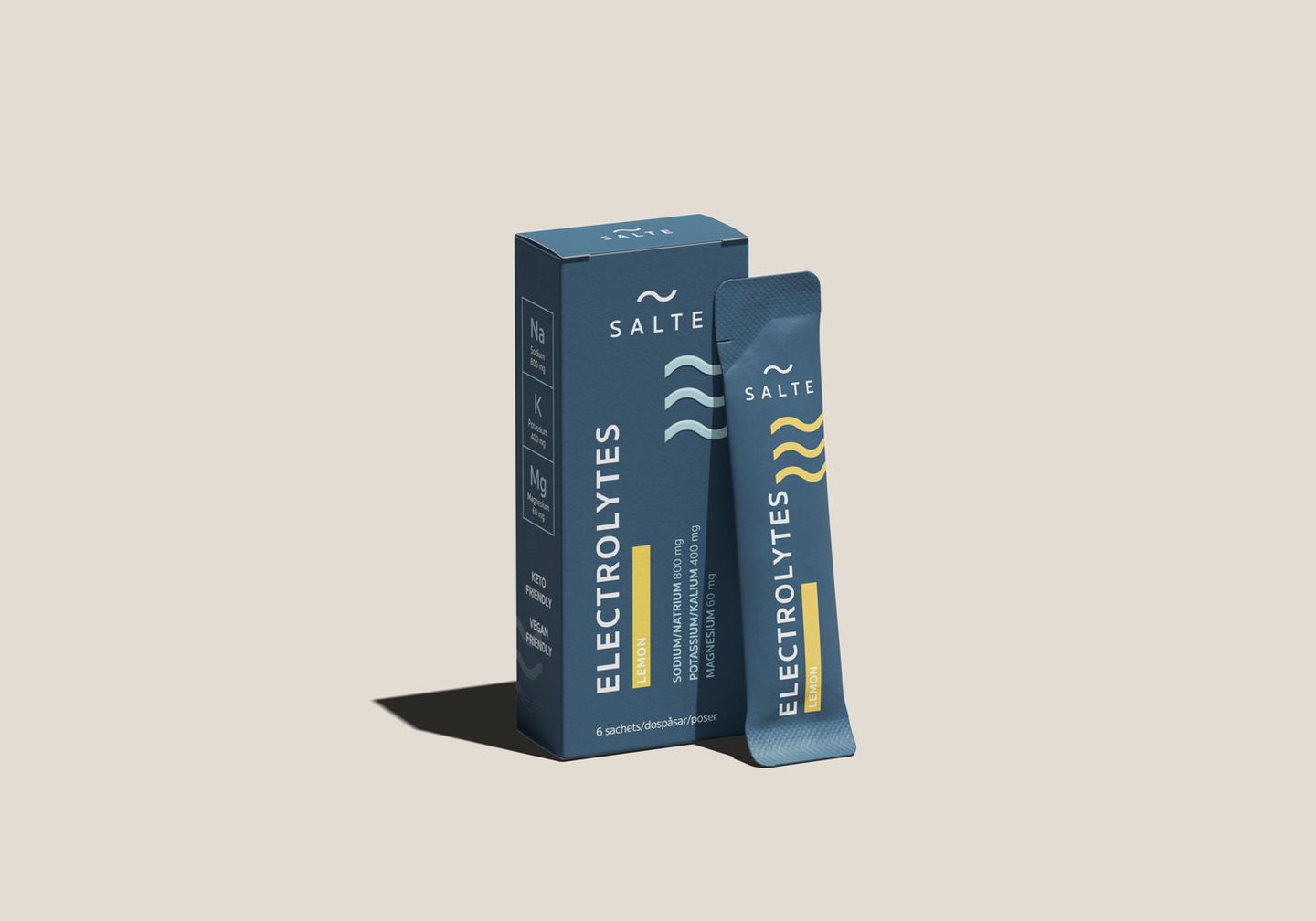
For a brand splitting its volume roughly evenly between D2C and B2B, that matters more than it would for a pure online business. A 30-count pouch is a subscription unit. A single-serve or small pack is a trial unit that can sit next to a till in a café. Same liquid, different job.
What unlocked the growth
"I wouldn't say there was one specific inflection point, but we started seeing a real compounding effect once distribution reached a certain scale," he said. "Increased retail presence drove broader brand awareness, which in turn lifted sales across all channels."
In other words: physical distribution acted as a paid-media multiplier rather than a substitute for it. SALTE's B2B footprint now spans pharmacies, health stores, gyms and cafés across Europe, with Scandinavia still the strongest region. On D2C, the brand runs Meta and Google Ads alongside affiliates and creators.
This is the pattern European operators tend to under-model. Retail listings are usually justified on their own P&L — margin per unit, sell-through, category share. SALTE's experience suggests the second-order effect on D2C acquisition efficiency may be the larger prize, particularly in compact, high-trust markets like Sweden and Norway where a pharmacy shelf carries category credibility that a Meta ad can’t buy.
The rest of the unlock, in Ståhl's view, was formulation and framing: "It's been a combination of timing, education, a clean formulation and transparency. Hydration has become a much bigger conversation, and we entered that space with a very clear point of view on what an electrolyte product should look like."
The CEO change is presented as consolidation rather than correction. The founders had been operating with shared responsibility and split ownership by strength.
"The brand has grown incredibly fast, and we've gone from an early-stage start-up to a much more established business faster than we anticipated," Ståhl said. "When the board felt I was the right person to lead the next phase, the decision was easy."
Competition is good
The European hydration space is expanding rapidly, with plenty of capital being invested.
In May 2026, Vienna-based waterdrop closed a funding round exceeding €100M, bringing in Aspeya, Atlantic Grupa, Temasek, Döhler and Bitburger. And Liquid I.V., owned by Unilever since 2020 and the largest powdered hydration brand in the US, expanded into Spain, Germany, France, Sweden and Iceland this year (entering Sweden, France and Iceland through Costco). Not to mention the wide range of upstart hydration brands across Europe.
The category growth supports the influx of brands. The global electrolyte powder market sits at around $7.1bn in 2026, growing roughly 8.9% a year. Within Europe, the UK (20.1% share) and Germany (17.9%) lead the electrolyte drinks category, with Sweden identified as a key growth market and online the fastest-growing channel at a 13.7% CAGR through 2034, according to Market Data Forecast.
"Competition is a good thing,” says Ståhl'. “It validates the category and ultimately gets more people thinking about hydration," he said. "For us, differentiation starts with the product: meaningful electrolyte doses, zero sugar and a clean formulation. But I think SALTE is becoming much more than the formula itself. We're very focused on education, transparency and building a community around hydration."
AUTHOR
CONTRIBUTOR
SUPPORTED BY PAPER RUN

Paper Run helps brands win back customers that email can't reach through automated direct mail that integrates with Shopify & Klaviyo.
SUPPORTED BY WAYFLYER

Wayflyer provides purpose-built financing to consumer brands worldwide, deploying over $6 billion to 7,000+ businesses since launching in 2020.
SUPPORTED BY RIVERFLOW

Riverflow is the leading creative AI platform for CPG and Fashion brands, built specifically for high quality, brand accurate visuals in both photoshoots, static ads and videos.
SUPPORTED BY VINE TALENT

Josh at Vine Talent provides consultative executive search for ambitious European consumer brands, helping founders access the calibre of international talent needed to unlock their next stage of growth.
JOIN OUR FOUNDER NETWORK:

VENICE FOUNDERS NETWORK
Where 200+ European consumer founders solve problems together.
An independent space for Europe's Consumer Founders & CEO's.