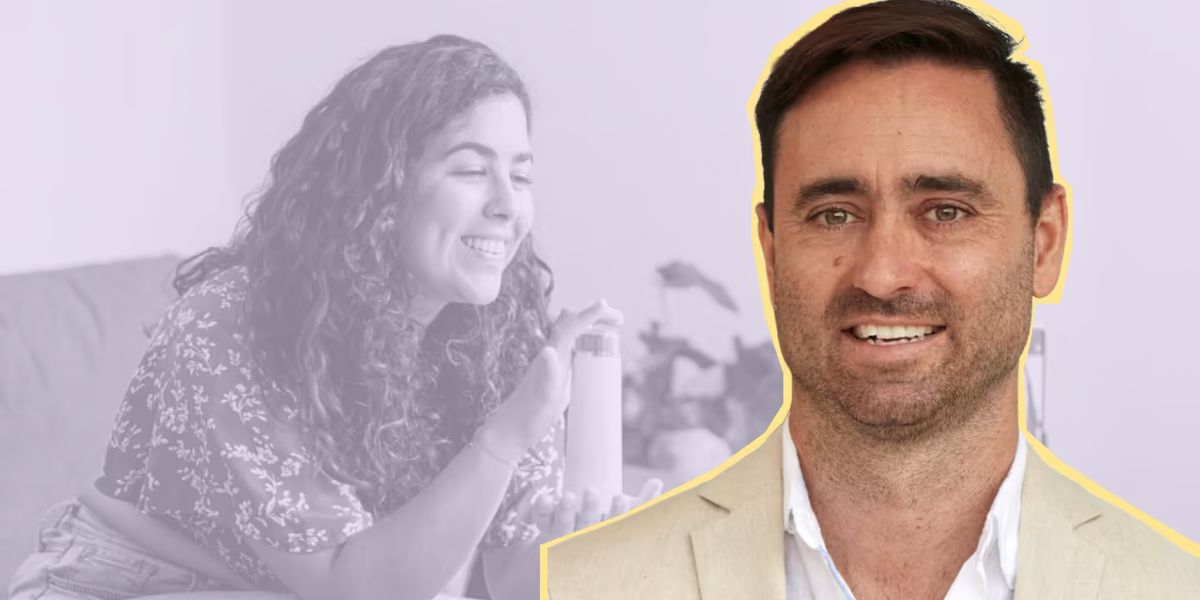
Launching another electrolyte brand in 2026 looks like a bad idea. The category is crowded, the science is commoditised, and the margins favour whoever already has scale. Danny Gray agrees. "No one needs another hydration brand," he says, which is why he refused to start LVLS until he had assembled an unfair advantage on all fronts.
"If you said 'Danny, start an electrolyte brand,' I'd tell you there's no chance, everyone's doing it," Danny told The Checkout. "But when you combine cultural relevance with highly resonant individuals, pair it with the scale and credibility of Boots, and use that scale to drive down COGS through manufacturing efficiencies, you effectively skip over 90% of the competition from day one. I was only going to do this if I had a really competitive edge."
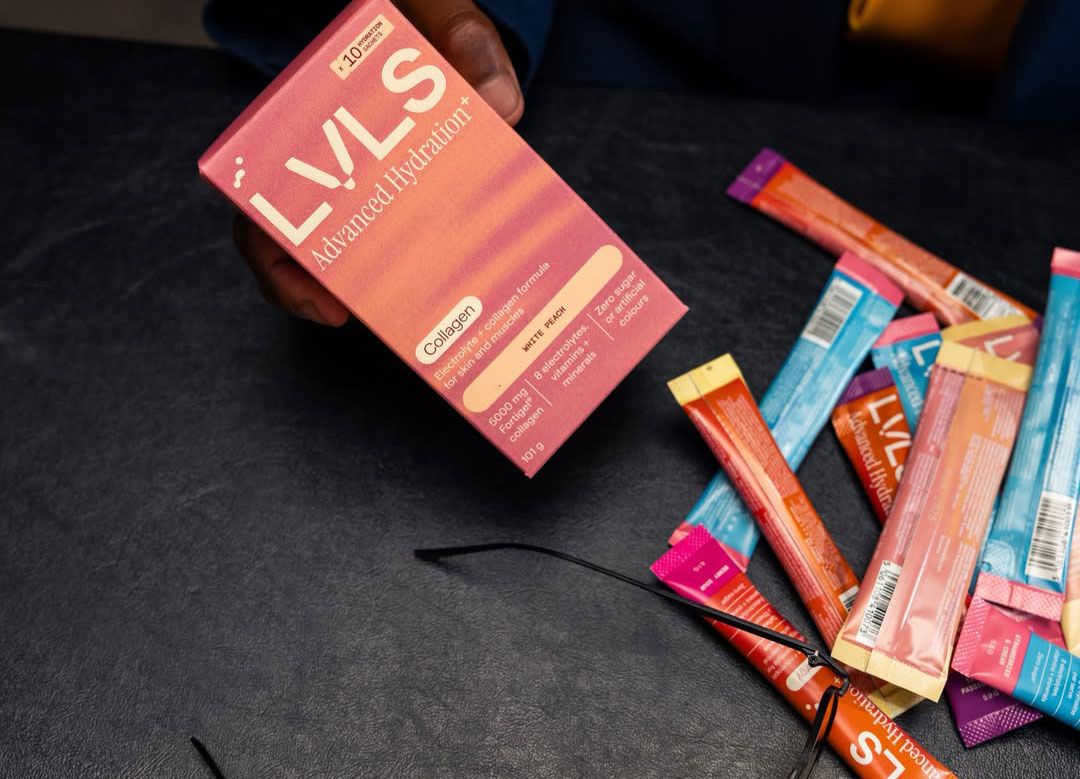
LVLS launched exclusively at Boots in May, across more than 750 UK stores. The range is three zero-sugar ‘Advanced Hydration’ functional ’electrolyte products, each built on a base of electrolytes and vitamins C, B6 and B12, then layered with a targeted functional ingredient:
- Essential: 700mg L-Tyrosine, positioned as a daily baseline mix aimed at supporting mental clarity and focus.
- Energy: 77mg of natural caffeine paired with 150mg L-Theanine, framed for pre-meeting, pre-training or early-starts.
- Collagen: 5,000mg of Fortigel® collagen peptides plus 160mg vitamin C for skin and joint support.
But Danny is the first to say a good product is the price of entry in today’s market, not the edge. The edge is everything he stacked around it, and it is what he believes lets LVLS have a solid chance of skipping most of the competition.
Finding a gap in a commoditised market
Before founding LVLS, Danny spent three years working at Steven Bartlett's Flight Story, negotiating Diary of a CEO's commercial partnerships, then its investment deals, and eventually working across Bartlett's portfolio of wellness companies.
Working on the podcast gave him a read on the wellness industry and what was resonating. "The podcast blew up. All these health and wellness experts came on, it went ballistic, and I was in that amazing position where I saw all of the data that everyone was resonating with, and all of the data that was turning people off," he says.
That shaped his read on the market. "Health and wellness is getting too optimised. It is getting a bit too serious," he says. The ice-bath-and-Cadence crowd is real but unrepresentative of most of the population. "You will have high performers who live like that," he says, but his focus is the everyday person, "my girlfriend who is a new mum and a director of a company, struggling on a few hours of sleep," who has no time to ‘optimise’ but just needs support in getting through the day.
Health and wellness is getting too optimised. It is getting a bit too serious.
LVLS' customers aren't doing ice baths and training for a sub-three-hour marathon, Danny says, "because they do not have the time." His conclusion: "Health and wellness should not be a second full-time job."
Stacking the advantage
Danny's core argument is that no single edge wins in a commoditised category. Product, price, distribution, credibility and culture all have to be solved before launch, not sequentially after it.
Join European founders, operators, and investors who read The Checkout every week.
His version of that stack includes a creator co-founder in Beta Squad's Sharky, who brings a multi-million-strong audience, a set of manufacturing and formulation partners, and an olympic and professional sport Performance Nutritionist who works with elite athletes including Lando Norris and Rory McIlroy, and an anchor retailer in Boots willing to commit deep distribution from day one.
Danny says he and his co-founder assembled the pieces as a single package. "You wrap this 360-degree deal up, and on the basis it goes ahead, you skip over most of the competition," he says. "It's very mission-led, but there's a high strategic angle, elements of the business placed in a very specific way to give us the best chance of cut-through."
It's very mission-led, but there's a high strategic angle, elements of the business placed in a very specific way to give us the best chance of cut-through.
Why LVLS went retail-first
The most counter-intuitive decision was leading with bricks-and-mortar retail rather than direct-to-consumer, where a founder with Danny's network and content firepower would normally start.
The reason is unit economics and brand trust. Committing to 750 stores from launch (with a purchase order to match), Danny says, drove his cost of goods well below what a DTC-first competitor could achieve. "You pass that volume to your manufacturers and they give you the best price. It's a competitive edge," he says.
There is a trade-off, though. Retail removes the rapid iteration loop that makes DTC powerful. "You can make 500 changes a day on DTC, test creative, optimise your proposition much sooner," he says. Retail is slower and less forgiving. But the credibility of a major UK retailer like Boots, he argues, is itself a marketing and fundraising asset that outweighs the loss of agility.
Through the deal Boots also gets exposure to a younger audience and a "cultural spotlight" through the LVLS brand and its co-founder Sharky. Retailers "five or ten years ago never would have done a deal like this," Danny says. "They need to find a way to tap into culture."
The product, credibility, and reach
The range is built to add "incrementality to a category that is blowing up." The credibility, Danny argues, is in the formulation team: the brand works with a performance nutritionist whose clients include elite athletes. "If someone looks behind the curtain, it is like, this is not just a marketing play, it actually stacks up. But it is for the everyday person." The pitch is the classic combination: "good price, good value, high credibility, and tapping into culture"
LVLS's most visible asset is Co-founder Sharky. Danny relays the creator's own framing: "He said, I have millions of people who follow me. I do not want to push a sugary drink, but I also do not want to tell them to do 20 things before they wake up. So what can we do together?" Pairing Sharky's reach with an athlete-grade credibility partner is what Danny believes separates LVLS from a typical creator drop.
Brand as the moat
Danny is blunt that performance marketing alone will not build LVLS, or any brand, in 2026. After a decade in which consumer brands poured budget into Meta and TikTok, he argues the returns on pure performance have thinned and the durable advantage has moved elsewhere. "Anyone can start an electrolyte brand. Anyone can get good cost of goods like us. But creating a brand that is highly resonant is your linchpin. That is your moat."
That resonance, he argues, is the one thing performance channels cannot manufacture. Targeting and creative testing can buy attention, but not affinity, and affinity is what survives a competitor matching your price or copying your formula. He still rates paid media as essential, but treats it as one layer rather than the entire engine.
His answer is real-world activation, partly a response to what he calls a "loneliness epidemic." Rather than a press launch, he wants "a massive padel tournament at a famous arena, with a DJ, and a party feel."
"We need to go back to the Richard Branson days of spinning things on their head and having fun, because the world is too serious." It is also why he works with Sharky as co-founder. "All those guys do is have fun. It is the polar opposite to these elitist brands."
We need to go back to the Richard Branson days of spinning things on their head and having fun, because the world is too serious.
The logic is that the product rides the movement, not the reverse. With paid spend underneath, the activations work "through osmosis," Danny says: "LVLS is a real-life movement that happens to have amazing products attached." The content those events generate then feeds the paid channels rather than replacing them.
Expansion, DTC, international, and new form factors
The coming months are about brand building so the work "translates to DTC, to Amazon, to everything else."
Because Sharky's audience is global, LVLS also plans to scale internationally earlier than most UK brands would. "Normally you build up the UK market and then go international. We are doing it the other way around." Amazon overseas and TikTok Shop are likely first, with a senior growth operator advising on the international strategy, and investors who Danny says can open up additional markets quickly.
Hydration is only the start. Danny sees a "massive need to supplement" among consumers but a tiredness with existing forms. "People are not going to pop 20 pills a day, although they need to. So what is the next thing? Different form factors. If you can drink something that tastes like Robinson's fruit juice while improving your vitamin and mineral levels, that is a great way to level up." New products are due next year, with what he promises will be "some interesting form factors."
Danny has spent a decade assembling the data points, network and experience that make LVLS possible. "This is my shot," he says. "If I can't make this work, something has gone wrong."
AUTHOR
SUPPORTED BY PAPER RUN

Paper Run helps brands win back customers that email can't reach through automated direct mail that integrates with Shopify & Klaviyo.
SUPPORTED BY WAYFLYER

Wayflyer provides purpose-built financing to consumer brands worldwide, deploying over $6 billion to 7,000+ businesses since launching in 2020.
SUPPORTED BY RIVERFLOW

Riverflow is the leading creative AI platform for CPG and Fashion brands, built specifically for high quality, brand accurate visuals in both photoshoots, static ads and videos.
SUPPORTED BY VINE TALENT

Josh at Vine Talent provides consultative executive search for ambitious European consumer brands, helping founders access the calibre of international talent needed to unlock their next stage of growth.
JOIN OUR FOUNDER NETWORK:

VENICE FOUNDERS NETWORK
Where 200+ European consumer founders solve problems together.
An independent space for Europe's Consumer Founders & CEO's.